Heliophysics
Written on January 13, 2026 January 13th, 2026 by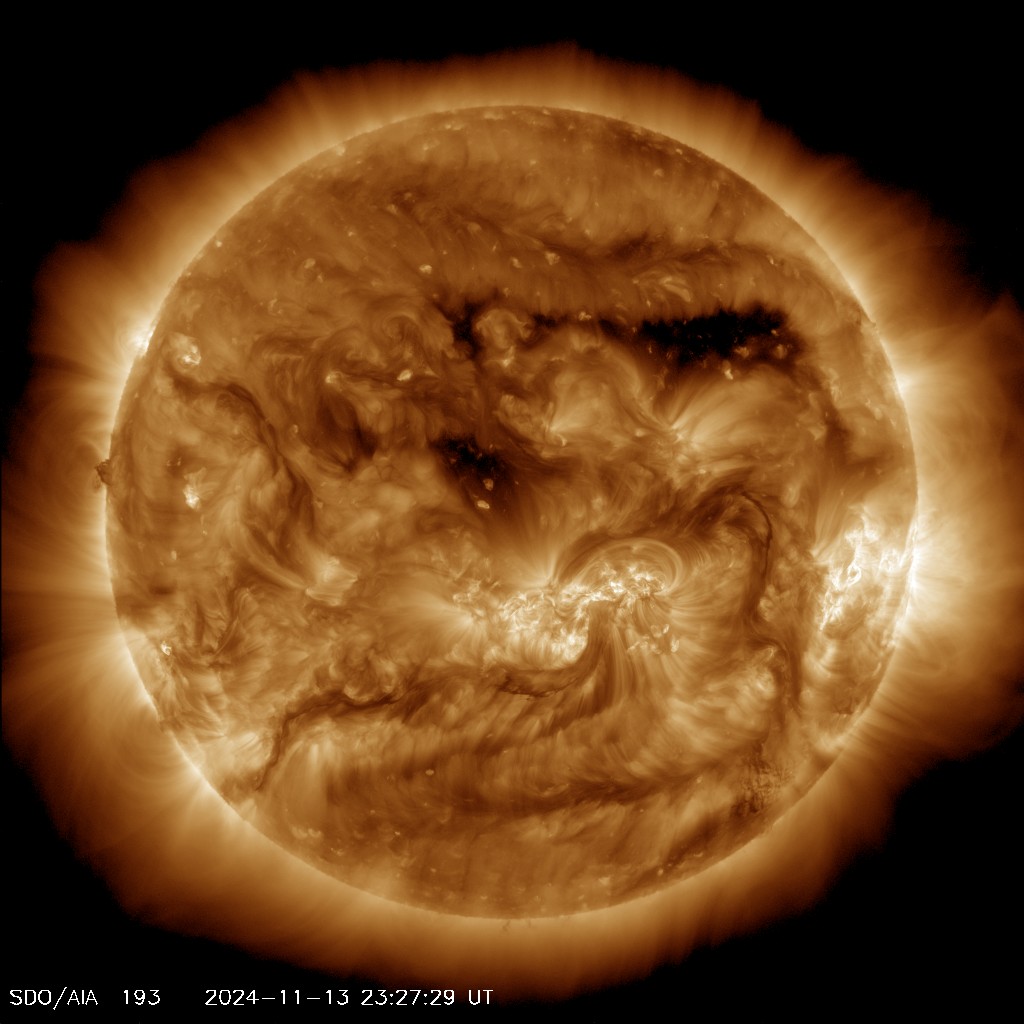
by
tags: covid 13 January 2026Heliophysics
The Science Mission Directorate Heliophysics Division studies the nature of the Sun, and how it influences the very nature of space
Stereo
@nasa-jpl @blackgirlscode its back up but with a warning @whitehouse
We expect the stereo.gsfc.nasa.gov web site to be decommissioned early in 2026. With a few exceptions for out-of-date material, all resources have been copied to https://stereo-ssc.nascom.nasa.gov/ . Please change any bookmarks or automatic downloads you may have set up. https://stereo.gsfc.nasa.gov/ @JHUAPL @CityOflosangeles KarenBass Kamlager Dove @la-county-isd
@usgs @usnavy @nasa-jpl the site for stereo is not responding! Im using the general population lab at BillieJeanKingLibrary @Nasa-develop hi @blackgirlscode @nasa-giss @emit-sds @podaac - Rashard
This site can’t be reached
The webpage at https://stereo.gsfc.nasa.gov/ might be temporarily down or it may have moved permanently to a new web address.
ERR_TUNNEL_CONNECTION_FAILED
External ip = 205.154.246.79 - whatismyipaddress.cOm
Decimal:3449484879
Hostname:lib-03-subnet-79.rdns.cenic.net
ASN:2152
ISP:CENIC
Services:None detected
Country:United States
State/Region:California
City:Cypress
Latitude:33.8170 (33° 49′ 1.05″ N)
Longitude:-118.0373 (118° 2′ 14.25″ W)
Hinode (Solar-B)
@nasa-pds @nasa-jpl discovered
NASA's Near Space Network
STATION NAME:McMurdo Ground Station
LOCATION:McMurdo, Antarctica
JAN 14 ~07:33 AM NZDT
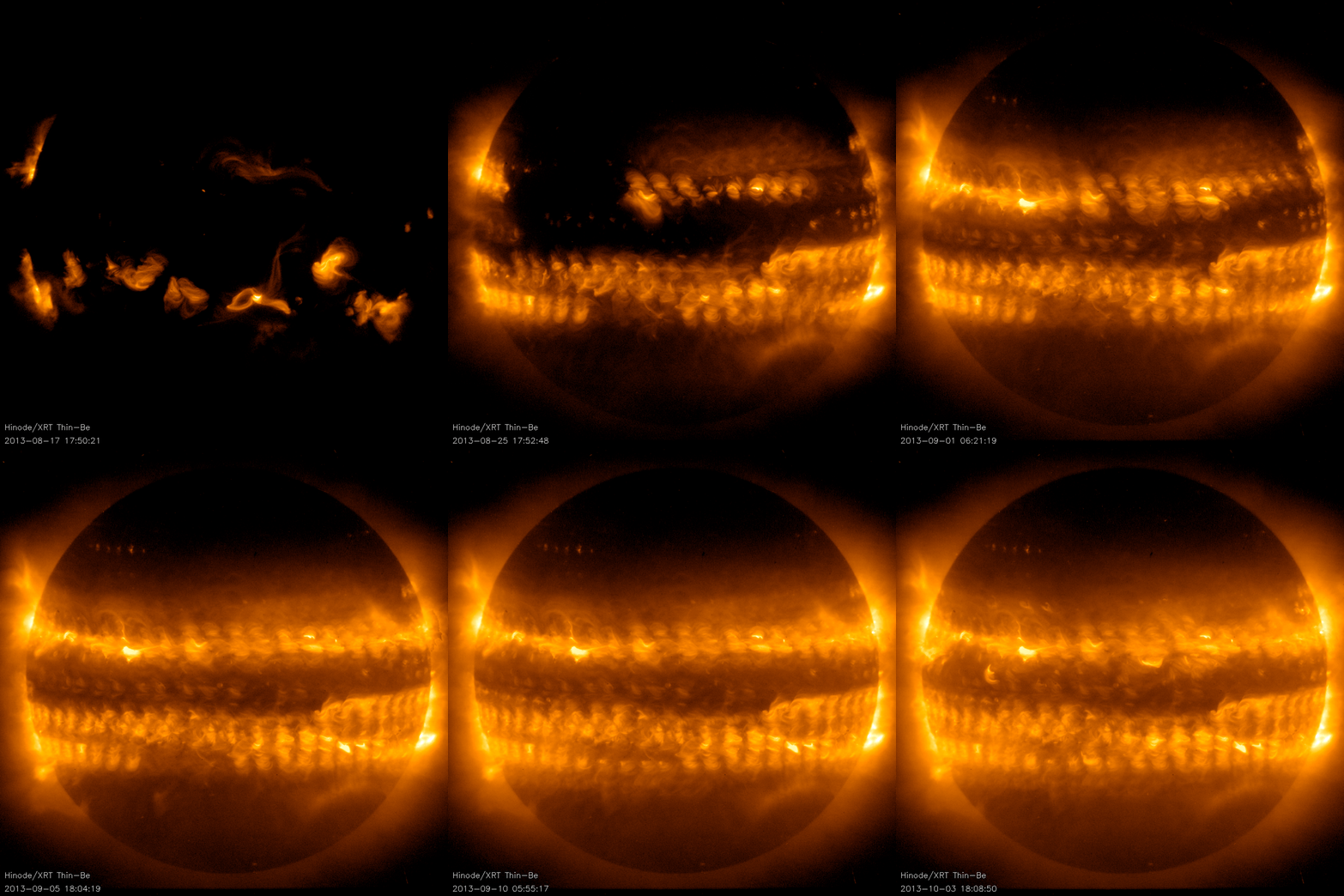
Hinode explores the magnetic fields of the Sun to improve understanding of what powers the solar atmosphere and drives solar eruptions. Hinode’s Solar Optical Telescope is the first space-borne instrument to measure the strength and direction of the Sun’s magnetic field on the Sun’s surface, the photosphere. missionWebfront : images @la-county-isd Karen Bass HollyJMitchell HildaSolis JAnice HAhn, I found another heliophysics mission @nasa-jpl @nasa-pds, it popped up in the NearSpaceNEtwork_MonitoringTool SCAN @blackgirlscode thethings that pop up in the monitoring tools are good things to use as ideas for managing a databese… safe content
About the SOHO Mission
SOHO, the Solar & Heliospheric Observatory, is a project of international collaboration between ESA and NASA to study the Sun from its deep core to the outer corona and the solar wind.
SOHO was launched on December 2, 1995. The SOHO spacecraft was built in Europe by an industry team led by prime contractor Matra Marconi Space (now EADS Astrium) under overall management by ESA. The twelve instruments on board SOHO were provided by European and American scientists. Nine of the international instrument consortia are led by European Principal Investigators (PI’s), three by PI’s from the US. Large engineering teams and more than 200 co-investigators from many institutions supported the PI’s in the development of the instruments and in the preparation of their operations and data analysis. NASA was responsible for the launch and is now responsible for mission operations. Large radio dishes around the world which form NASA’s Deep Space Network are used for data downlink and commanding. Mission control is based at Goddard Space Flight Center in Maryland.
Further information about SOHO: PDF @nasa=pds @blackgirlscode
IRIS
Interface Region Imaging Spectrograph
 hi coral
[added 1/6/25] @nasa-jpl @nasa-pds hi @blackgirlscode link
hi coral
[added 1/6/25] @nasa-jpl @nasa-pds hi @blackgirlscode link
NASA’s Parker Solar Probe Discovers Natural Radio Emission in Venus’ Atmosphere
On a mission to “touch the Sun,” NASA’s Parker Solar Probe became the first spacecraft to fly through the corona – the Sun’s upper atmosphere – in 2021,During a brief swing by Venus, NASA’s Parker Solar Probe detected a natural radio signal that revealed the spacecraft had flown through the planet’s upper atmosphere.
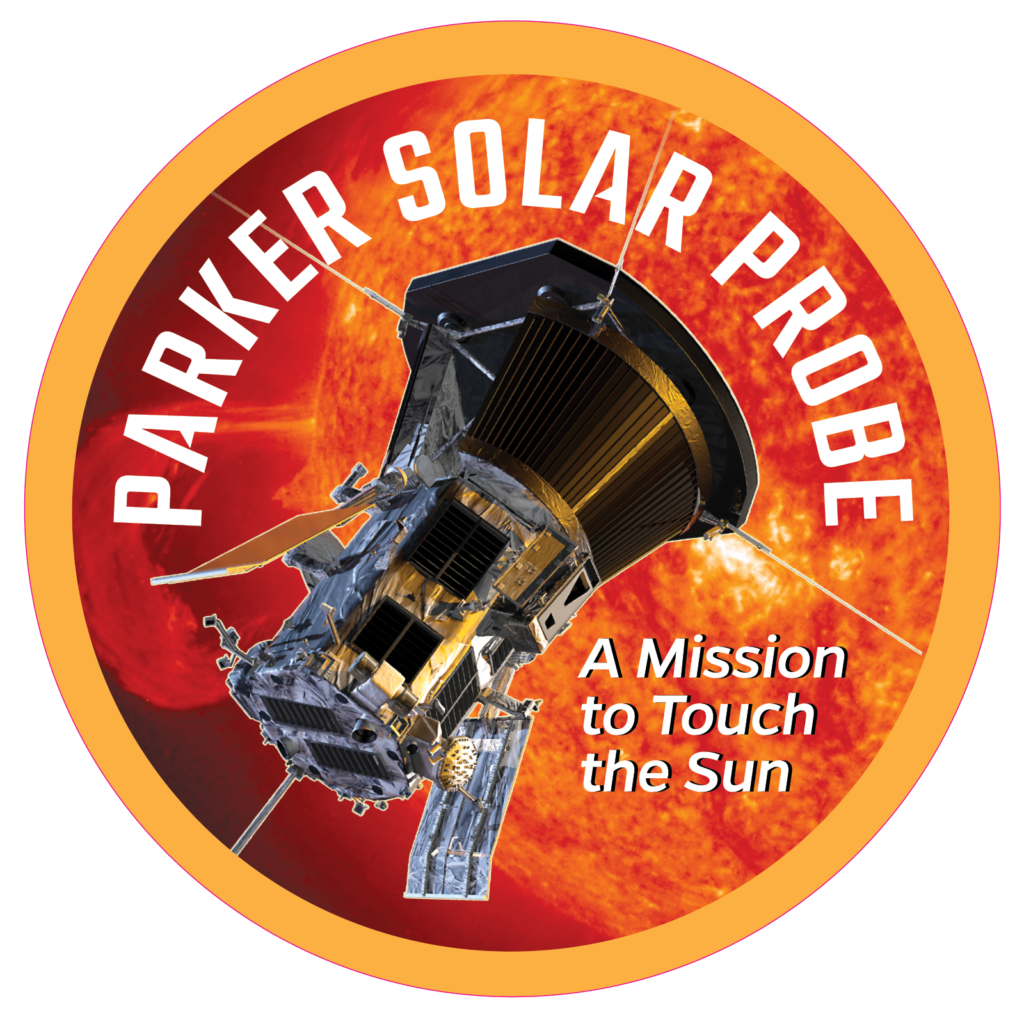
Bepi Columbo @nasa-pds @blackgirlscode Horizons Results @nasa API SOURCE: NASA/JPL Horizons API
Page up

JPL Horizons, version 4.98d
Type '?' for brief help, '?!' for details,
'-' for previous prompt, 'x' to exit
System news updated August 7, 2025

Horizons> epic
*******************************************************************************
 Revised: Sep 03, 2025              BepiColombo / (Sun)                    -121
                            http://sci.esa.int/bepicolombo/
JPL Horizons, version 4.98d
Type '?' for brief help, '?!' for details,
'-' for previous prompt, 'x' to exit
System news updated November 13, 2025

Horizons> hinode

>EXACT< name search [SPACE sensitive]:
 NAME = hinode;
Continue [ <cr>=yes, n=no, ? ] :
*******************************************************************************
JPL/DASTCOM            Small-body Index Search Results     2026-Jan-13 10:36:38

 Comet AND asteroid index search:

   NAME = hinode;

 Matching small-bodies:
    No matches found.
*******************************************************************************
 Select ... [F]tp, [M]ail, [R]edisplay, ?, <cr>: hi
*******************************************************************************
 Multiple major-bodies match string "HI*"

  ID#      Name                               Designation  IAU/aliases/other
  -------  ---------------------------------- -----------  -------------------
      506  Himalia                                         JVI
      558  Philophrosyne                      2003J15      JLVIII 55067
      627  Skathi                             2000S8       SXXVII
      637  Bebhionn                           2004S11      SXXXVII 65039
      663  Thiazzi                            2004S33      65075
      814  Hippocamp                          2004N1
      -75  OMOTENASHI (spacecraft)            2022-156D
     -235  STEREO-B (spacecraft)              2006-047B    BEHIND
  -234900  STEREO Third Stage (spacecraft)    2006-047C
  -134381  Kepler Booster (Third Stage) (space2009-011B
  -140267  Himawari-8 (spacecraft)            2014-060A
  -141836  Himawari-9 (spacecraft)            2016-064A
120136108  Hi'iaka                                         Haumea I

   Number of matches =  13. Use ID# to make unique selection.
*******************************************************************************
 Select ... [F]tp, [M]ail, [R]edisplay, ?, <cr>: -235
*******************************************************************************
 Revised:  Feb 08, 2023             STEREO-B Spacecraft                    -235
                                http://stereo.gsfc.nasa.gov/
 NOTE:
  Contact with STEREO-B was lost 2014-Oct-01.

  After 22 months, contact was regained at 22:27 UTC on August 21, 2016, when
  the Deep Space Network established a lock on STEREO-B for 2.4 hours. The
  trajectory here is updated to use that tracking data.

  It has been determined the spacecraft is in an uncontrolled spin of
  3 deg/second.

  2023-Feb-08:
   There has been no contact or new tracking data since 2016, but an updated
   prediction was added to support a search effort.

  2017-Sep-20:
   Fix did NOT occur. Last contact with the spacecraft was September 23, 2016.

  2016-Oct-14:
   Another opportunity to potentially fix the spacecraft will not occur until
   mid-2017. Once its computer is powered on there will be about two minutes
   to upload the fix before STEREO-B enters failure mode again.

  http://stereo-ssc.nascom.nasa.gov/behind_status.shtml

 BACKGROUND:
  STEREO (Solar TErrestrial RElations Observatory) is the third mission in
  NASA's Solar Terrestrial Probes program (STP). This two-year mission will use
  two nearly identical space-based observatories - one ahead of Earth in its
  orbit, the other trailing behind - to provide stereoscopic measurements to
  study the Sun and the nature of coronal mass ejections (CMEs).

 OBJECTIVES:
  * Understand the causes and mechanisms of coronal mass ejection (CME)
     initiation.
  * Characterize the propagation of CMEs through the heliosphere.
  * Discover the mechanisms and sites of energetic particle acceleration in
     the low corona and the interplanetary medium.
  * Improve the determination of the structure of the ambient solar wind.
 SPACECRAFT:
  Launch (Delta II 7925-10L) = October 26, 2006 @ 1:53
  Mission end                = 2 year nominal mission after launch
  Dimensions                 = 1.14m x 1.22m (launch), 6.47m x 2.03m (deployed)
  Launch Mass                = 620 kg  (includes propellant)
  Power consumption          = 475 watts
  Data downlink              = 720 kilobits/sec
  Memory                     = 1 GB
  Attitude                   = control within 7", knowledge within 0.1"
 INSTRUMENTS (4 packages on each spacecraft):
  * Sun Earth Connection Coronal and Heliospheric Investigation (SECCHI)
  * STEREO/WAVES (SWAVES) radio burst tracker
  * In-situ Measurements of Particles and CME Transients (IMPACT)
  * PLAsma and SupraThermal Ion Composition (PLASTIC)
 ORBIT:
  STEREO-A and STEREO-B will be launched together, then separate. The Moon's
  gravity will be used to redirect the observatories to their appropriate
  orbits, something the launch vehicle alone is not able to do.
  For the first three months after launch, the two observatories will fly in
  highly elliptical orbits extending from very close to Earth to just beyond
  the Moon's orbit. STEREO Mission Operations personnel at APL will
  synchronize spacecraft orbits so that about two months after launch they
  encounter the Moon, at which time one of them is close enough to use the
  Moon's gravity to redirect it to a position "ahead"/leading the Earth.
  Approximately one month later, the second observatory will encounter the
  Moon again and be redirected to its orbit "behind"/trailing the Earth.
 POST-LAUNCH SPACECRAFT TRAJECTORY
   Merged segments, includes 2016-Aug-21 recovery tracking data update,
   with long-term predictions after 2016-Sep-12:
  Trajectory name                             Start        Stop
  -------------------------------------    -----------  -----------
  concatenated DEPM trajectory segments    2006-Oct-26  2014-Sep-28
  235_120day_20140928_01.V0.2              2014-Sep-28  2014-Nov-25
  235_120day_20141125_01.V0.2              2014-Nov-25  2015-Jan-01
  235_1461day_20150101_01.V0.2             2015-Jan-01  2015-Jul-16
  235_1460day_20150716_01.V0.2             2015-Jul-16  2016-Jan-29
  235_5295day_20160129_01.V0.5             2016-Jan-29  2016-Aug-21
  behind_2016_256_01.depm                  2016-Aug-21  2016-Sep-12
  235_5295day_20160129_01.V0.5             2016-Sep-12  2020-Oct-27
  235_baseline_1460day_20201027_01         2020-Oct-27  2024-Oct-26
******************************************************************************
 Select ... [E]phemeris, [F]tp, [M]ail, [R]edisplay, ?, <cr>:
layout: default title: HoleToAnotherUniVersE